Bramante, Donato: Hl. Christophorus
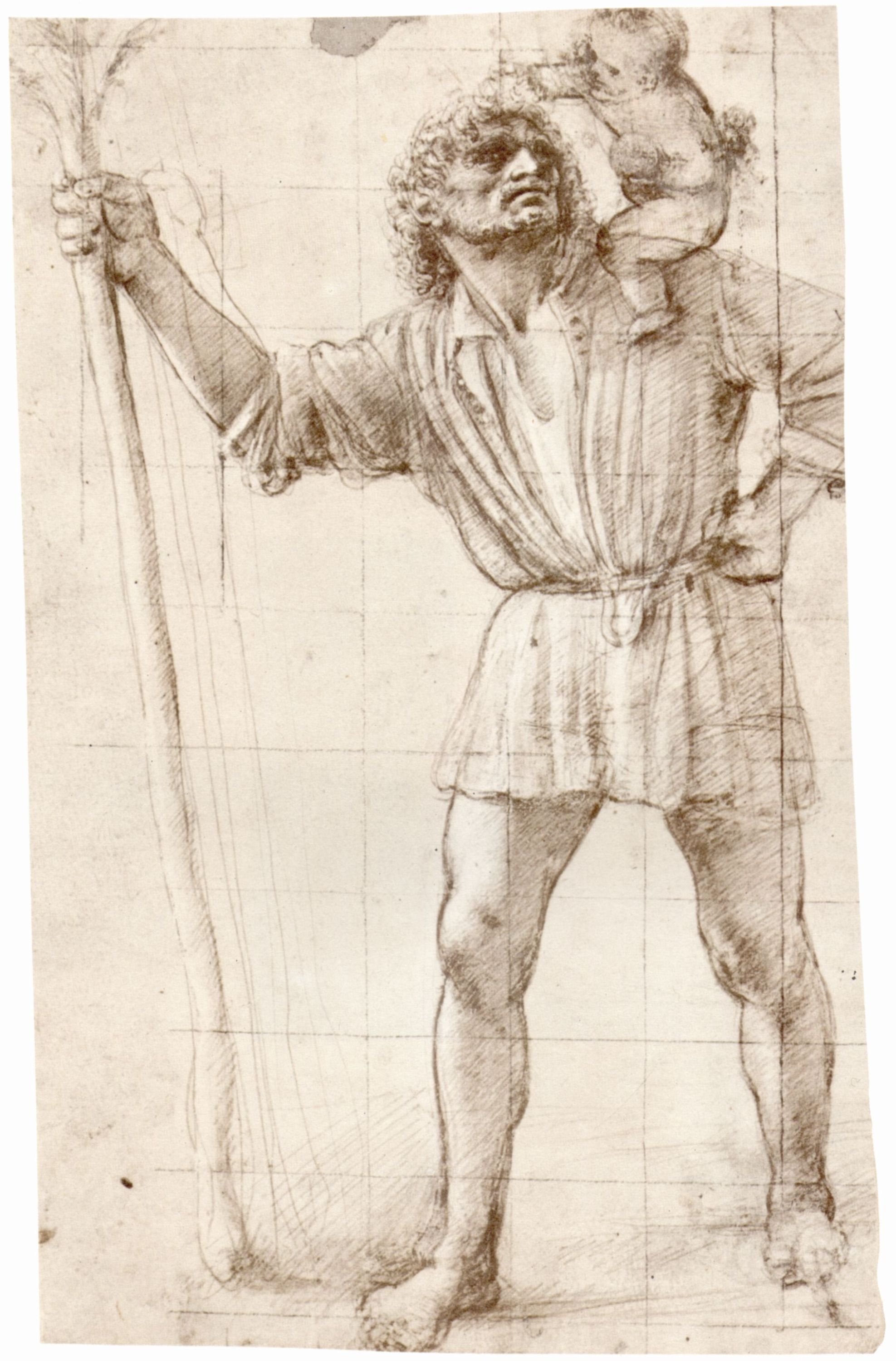
| Künstler: | Bramante, Donato |
| Entstehungsjahr: | 2. Hälfte 15. Jh. |
| Maße: | 30,8 × 19 cm |
| Technik: | Silberstift und Weißhöhung auf präpariertem Papier, quadriert |
| Aufbewahrungsort: | Kopenhagen |
| Sammlung: | Statens Museum for Kunst, Den Kongelige Kobberstiksamling |
| Epoche: | Renaissance |
| Land: | Italien |
| Kommentar: | Wahrscheinlich Entwurf für eine Freskofigur |
Brockhaus-1809: Bramante d'Urbino
Brockhaus-1911: Bramante · Christophórus
Goetzinger-1885: Christophorus
Heiligenlexikon-1858: Christianus a, S. Donato (18) · Christophorus, B. (11) · Christophorus Spotecus (38) · Christophorus, B. (13) · Christophorus, B. (12) · Christophorus Siebenhiener (32) · Christophorus Rotundus (20) · Christophorus Plateanus (37) · Christophorus Sabaita, S. (2) · Christophorus Ruitius (24) · Christophorus, S. (8) · Christophorus, S. (7) · Christophorus, SS. (5) · Christophorus, S. (9) · Christophorus, S. (6) · Christophorus, S. (10) · ChristoPhorus, S. (1) · Christophorus, S. (4) · Christophorus, S. (3) · Christophorus Landinus (35) · Christophorus Bembler (15) · Christophorus a Campo passo (33) · Christophorus Bravus (27) · Christophorus Bioned (18) · Christophorus (39) · Christophorus (29) · Christophorus (23) · Christophorus (34) · Christophorus (30) · Christophorus Grandaevus (16) · Christophorus de, S. Gemillano (31) · Christophorus Hompeschius (14) · Christophorus Heggelin (36) · Christophorus de Thermis (17) · Christophorus Crivellus (21) · Christophorus Cataneus (25) · Christophorus de Mendoza (26) · Christophorus de Alzanis (28)
Herder-1854: Bramante · Christophorus [2] · Christophorus [1]
Pierer-1857: Bramante [2] · Bramante [1] · Donāto, S. · Donāto · Christophŏrus · Christophŏrus
Buchempfehlung
Tschechow, Anton Pawlowitsch
Drei Schwestern. (Tri Sestry)

Das 1900 entstandene Schauspiel zeichnet das Leben der drei Schwestern Olga, Mascha und Irina nach, die nach dem Tode des Vaters gemeinsam mit ihrem Bruder Andrej in der russischen Provinz leben. Natascha, die Frau Andrejs, drängt die Schwestern nach und nach aus dem eigenen Hause.
64 Seiten, 4.80 Euro
Im Buch blättern
Ansehen bei Amazon
Buchempfehlung
Große Erzählungen der Spätromantik

Im nach dem Wiener Kongress neugeordneten Europa entsteht seit 1815 große Literatur der Sehnsucht und der Melancholie. Die Schattenseiten der menschlichen Seele, Leidenschaft und die Hinwendung zum Religiösen sind die Themen der Spätromantik. Michael Holzinger hat elf große Erzählungen dieser Zeit zu diesem Leseband zusammengefasst.
- Clemens Brentano Die drei Nüsse
- Clemens Brentano Geschichte vom braven Kasperl und dem schönen Annerl
- E. T. A. Hoffmann Das steinerne Herz
- Joseph von Eichendorff Das Marmorbild
- Ludwig Achim von Arnim Die Majoratsherren
- E. T. A. Hoffmann Das Fräulein von Scuderi
- Ludwig Tieck Die Gemälde
- Wilhelm Hauff Phantasien im Bremer Ratskeller
- Wilhelm Hauff Jud Süss
- Joseph von Eichendorff Viel Lärmen um Nichts
- Joseph von Eichendorff Die Glücksritter
430 Seiten, 19.80 Euro
Ansehen bei Amazon
- ZenoServer 4.030.014
- Nutzungsbedingungen
- Datenschutzerklärung
- Impressum