Mantegna, Andrea (Schule): Herkules und die Hydra
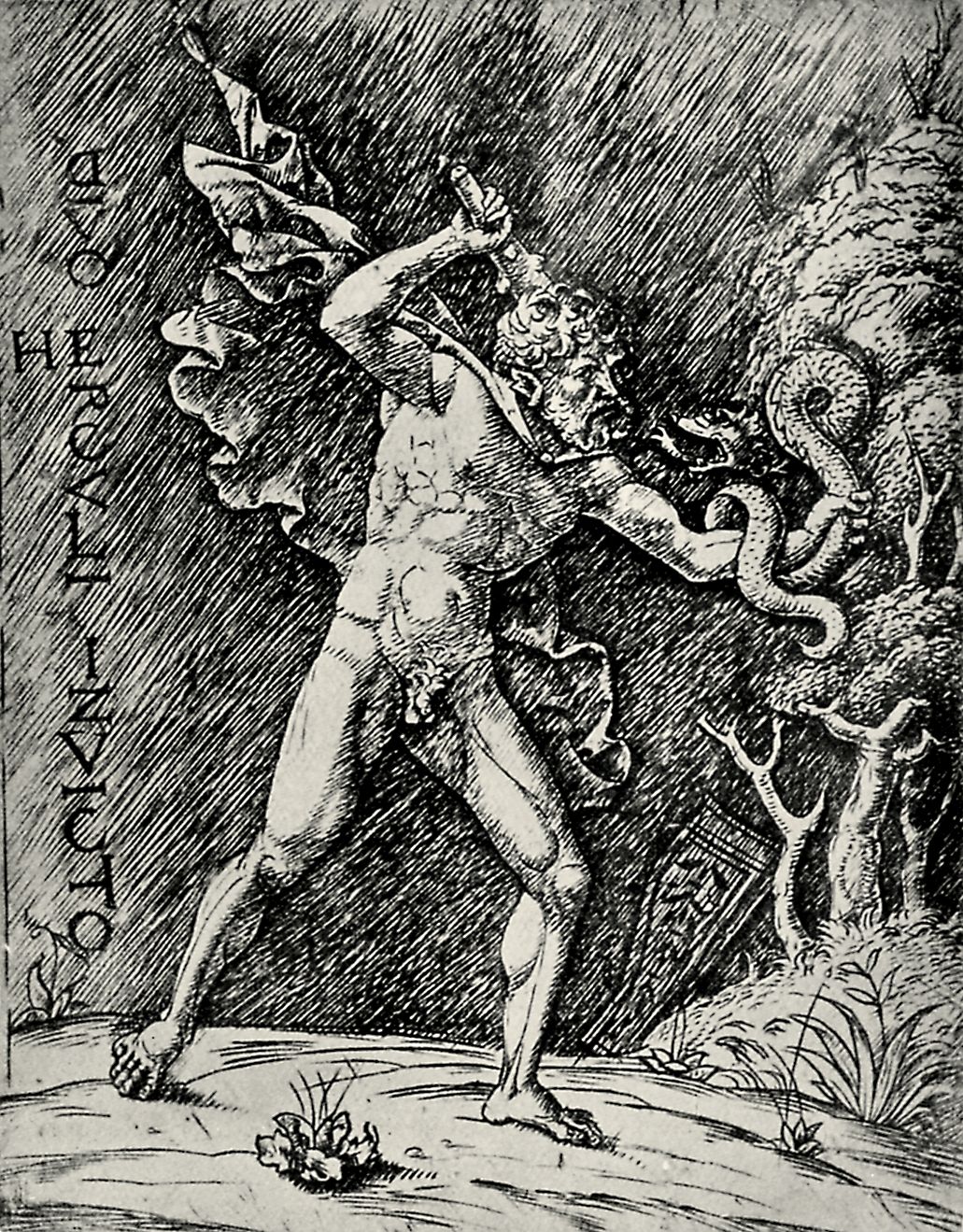
| Künstler: | Mantegna, Andrea (Schule) |
| Entstehungsjahr: | um 1500 |
| Maße: | 14,5 × 11,2 cm |
| Technik: | Kupferstich |
| Aufbewahrungsort: | London |
| Sammlung: | British Museum, Department of Prints and Drawings |
| Epoche: | Renaissance |
| Land: | Italien |
| Kommentar: | Vgl. die Figur Vulkan im Mantegnas Gemälde »Der Parnass« von 1497, heute im Louvre |
Adelung-1793: Schule, die · Real-Schule, die
Brockhaus-1809: Die Hydra von Lerna · die Veterinair-Schule · Die Flamändische Schule · Die Florentinische Schule
Brockhaus-1911: Hydra [3] · Hydra · Hydra [2] · Mantegna · Tübinger Schule · Megarische Schule · Eleatische Schule · Antiochenische Schule · Hohe Schule · Elische Schule
DamenConvLex-1834: Hydra · Niederländische Schule
Eisler-1904: Schottische Schule · Milesische Schule · Elische Schule
Eisler-1912: Schottische Schule · Elische Schule
Hederich-1770: Lernaea Hydra · Hydra Lernaea
Herder-1854: Hydra [1] · Hydra [2] · Lernäische Schlange oder Hydra · Mantegna · Salamantinische Schule · Megarische Schule · Florentiner Schule · Elische Schule · Italienische Schule · Ionische Schule
Meyers-1905: Hydra [2] · Hydra [1] · Hydra [3] · Mantegna · Megarische Schule · Schule von Athen · Tübinger Schule · Schule · Paritätische Schule · Pneumatische Schule · Eleatische Schule · Antiochēnische Schule · Alexandrinische Schule · Elische Schule · Ionische Schule · Hohe Schule · Erētrische Schule
Pierer-1857: Hydra [2] · Hydra [1] · Mantegna · Florentiner Schule · Ionische Schule · Italienische Schule · Elische Schule · Aristotelische Schule · Antiochcnische Schule · Alexandrinische Schule · Eleatische Schule · Brabanter Schule · Bologneser Schule
Buchempfehlung
L'Arronge, Adolph
Hasemann's Töchter. Volksstück in 4 Akten

Als leichte Unterhaltung verhohlene Gesellschaftskritik
78 Seiten, 6.80 Euro
Im Buch blättern
Ansehen bei Amazon
- ZenoServer 4.030.014
- Nutzungsbedingungen
- Datenschutzerklärung
- Impressum