Cranach d. Ä., Lucas: »Martyrium der zwölf Apostel«, Hl. Philippus
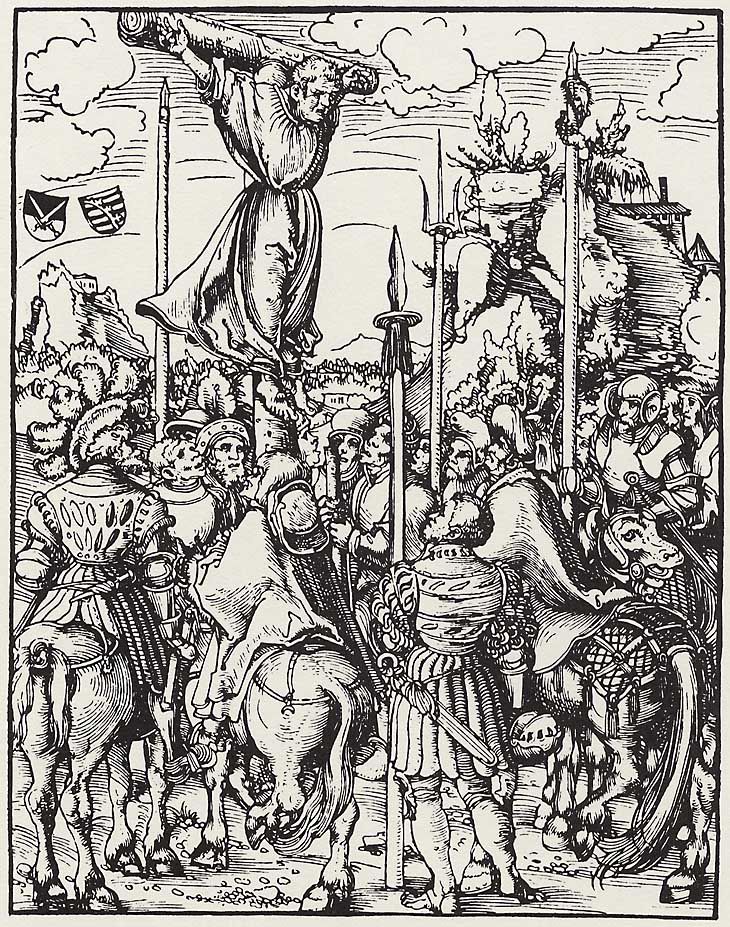
| Künstler: | Cranach d. Ä., Lucas |
| Entstehungsjahr: | um 1512 |
| Maße: | 16,3 × 12,6 cm |
| Technik: | Holzschnitt |
| Aufbewahrungsort: | Berlin |
| Sammlung: | Kupferstichkabinett |
| Epoche: | Renaissance |
| Land: | Deutschland |
| Kommentar: | Aus einer Serie von 12 Blättern |
Adelung-1793: Apostel, der · Zwölf
Brockhaus-1837: Apostel · Zwölf Nächte
Brockhaus-1911: Lehre der zwölf Apostel · Philippus Arabs · Philippus [2] · Philippus · Apostel · Zwölf Nächte · Zwölf Götter · Cranach
DamenConvLex-1834: Paulus, der Apostel · Petrus, der Apostel · Apostel · Cranach, Lucas
Heiligenlexikon-1858: Philippus (85) · Philippus (84) · Philippus (86) · Philippus (88) · Philippus (87) · Philippus (83) · Philippus (79) · Philippus (78) · Philippus (80) · Philippus (82) · Philippus (81) · Philippus (89) · Philippus (98) · Philippus (97) · Philippus (99) · Philippus a Jesu, S. (3) · Philippus a Carponeto (57) · Philippus (96) · Philippus (91) · Philippus (90) · Philippus (92) · Philippus (95) · Philippus (94) · Philippus (52) · Philippus (50) · Philippus (53) · Philippus (58) · Philippus (56) · Philippus (49) · Jacobus et Philippus, BB. (49) · Dulcetti Philippus · Jacobus-Philippus, B. (40) · Philippus (46) · Philippus (45) · Philippus (60a) · Philippus (74) · Philippus (72) · Philippus (75) · Philippus (77) · Philippus (76) · Philippus (71) · Philippus (65) · Philippus (60b) · Philippus (66) · Philippus (68) · Philippus (67)
Herder-1854: Apostel · Cranach
Meyers-1905: Lehre der zwölf Apostel · Martyrĭum · Apostel [2] · Apostel [1] · Zwölf Nächte · Zwölf Götter · Zwölf Tafeln · Zwölf Stämme · Testamente der zwölf Patriarchen · Zwölf · Zwölf Artikel · Cranach
Pierer-1857: Zwölf Apostel · Martyrĭum · Pseudo-Apostel · Apostel · Ehrhafte Apostel · Zwölf Tafeln · Zwölf Boten · Zwölf · Gesetze der zwölf Tafeln · Testamente der zwölf Patriarchen · Cranach
Buchempfehlung
Lewald, Fanny
Clementine

In ihrem ersten Roman ergreift die Autorin das Wort für die jüdische Emanzipation und setzt sich mit dem Thema arrangierter Vernunftehen auseinander. Eine damals weit verbreitete Praxis, der Fanny Lewald selber nur knapp entgehen konnte.
82 Seiten, 5.80 Euro
Im Buch blättern
Ansehen bei Amazon
- ZenoServer 4.030.014
- Nutzungsbedingungen
- Datenschutzerklärung
- Impressum